
One article a day, three levels your way.
Free graded English reading: every article comes in Easy, Medium and Hard, with listen-along audio. Vocabulary and quizzes are free with an account. Sign up free →
Longer sentences, more descriptive words (about B1)
Scientists Find Complex Life in Record Heat
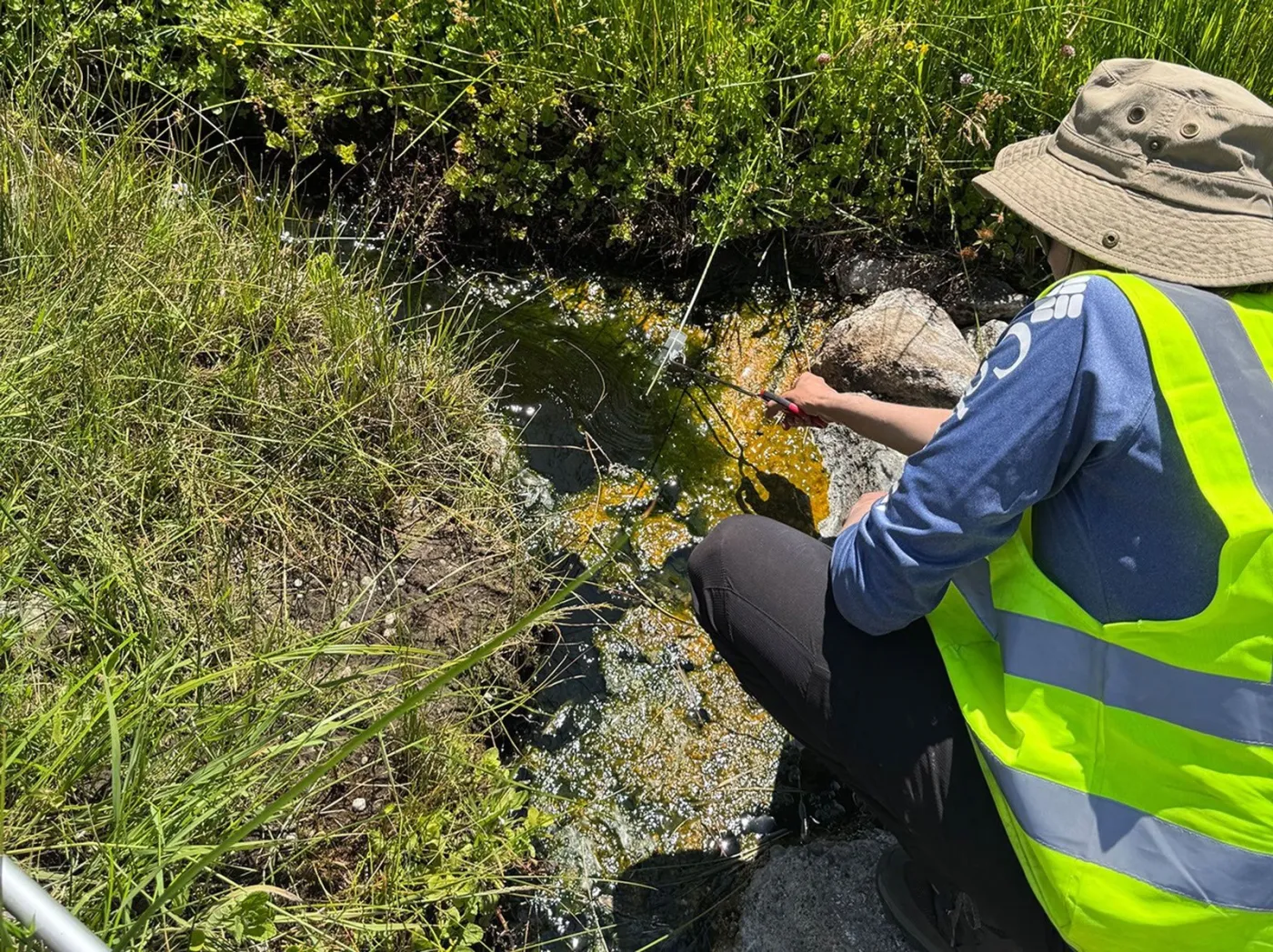
NASA-supported scientists have found an amoeba that lives in water hotter than experts once thought possible for complex life. The organism was recorded in Lassen Volcanic National Park in California. It can divide and produce new cells at 145 degrees Fahrenheit, or 63 degrees Celsius. That temperature is now the highest known limit for eukaryotes, which are living things whose cells contain a nucleus. The organism is named Incendiamoeba cascadensis and is also called the fire amoeba. It stops reproducing above 145 degrees, but it can still move and search for food at 147 degrees Fahrenheit.
Researchers study such hardy organisms to learn how life might survive on other worlds, including Mars. Life forms that endure extreme heat, acid, or radiation are called extremophiles. Most earlier research focused on simple single-celled bacteria and archaea. The new finding shows that more complex eukaryotic cells can survive greater heat than scientists had expected. This may also help identify places where complex life could exist beyond Earth.
High temperatures can damage proteins and break cell membranes. Scientists had thought the inner parts of eukaryotic cells would become unstable above 144 degrees Fahrenheit. The fire amoeba shows that this limit is not correct. Researchers studied its genes and found ways it protects DNA and keeps proteins in the right shape. Similar genetic material has appeared in hot water samples from Yellowstone and New Zealand. Related amoebas may therefore live in geothermal environments around the world.
The discovery expands ideas about how complex life might persist elsewhere. Survival, however, depends on more than temperature. An environment also needs suitable acidity, oxygen, pressure, water, and food. The fire amoeba cannot live alone and needs other organisms for support. Earth is still the only planet known to provide all of these conditions.
Why is the discovery of the fire amoeba important for the search for life beyond Earth?
Adapted from NASA Earth.
Select Vocabulary or Quiz to practice.
Vocabulary
12 key words — tap a word for its meaning and an example
Quiz
11 questions