
One article a day, three levels your way.
Free graded English reading: every article comes in Easy, Medium and Hard, with listen-along audio. Vocabulary and quizzes are free with an account. Sign up free →
Longer sentences, more descriptive words (about B1)
Hubble Uncovers Ancient Galaxy Collision
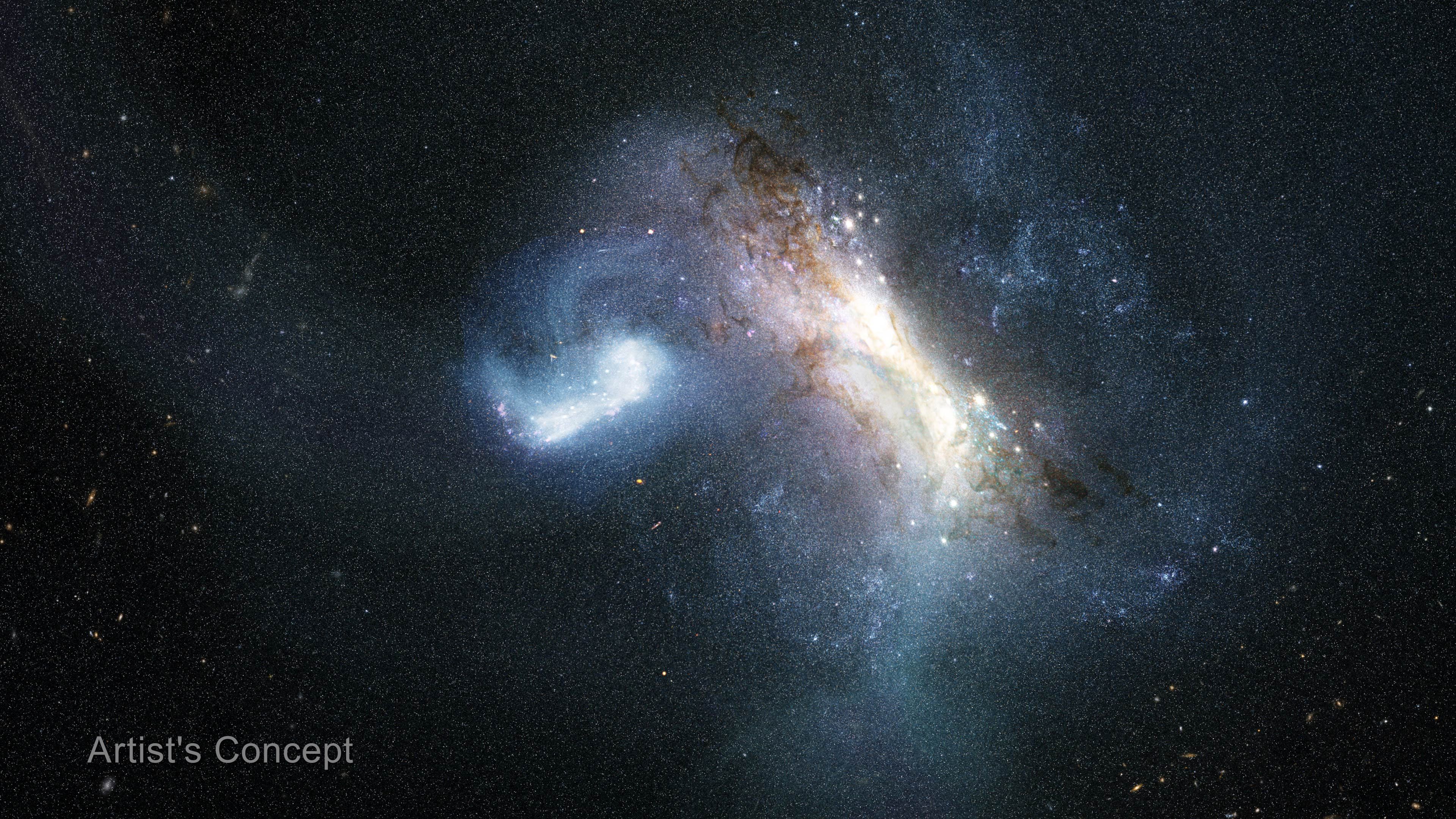
The Milky Way reached its current size over time by absorbing smaller neighbor galaxies. New data from NASA's Hubble Space Telescope confirms that a dwarf system merged into our developing galaxy during its initial formation phase. This discovery pushes the known timeline of galactic collisions back by an additional 1.8 billion years.
Today, our galaxy is a massive spiral with hundreds of billions of stars. Its growth comes from internal star creation and external galaxy collisions. Around 10 billion years ago, the Milky Way integrated a system called Gaia-Sausage-Enceladus. Astronomers suspected an even older collision occurred before that event.
To prove this early collision, researchers analyzed a globular cluster named NGC 6388. Hubble observations showed that stars in NGC 6388 contain low amounts of heavy elements. This chemical signature confirms that the cluster originated outside our galaxy and joined it 11.8 billion years ago.
Why do you think scientists spend so much time studying events that happened billions of years ago?
Adapted from NASA Universe.
Select Vocabulary or Quiz to practice.
Vocabulary
15 key words — tap a word for its meaning and an example
Quiz
10 questions