
One article a day, three levels your way.
Free graded English reading: every article comes in Easy, Medium and Hard, with listen-along audio. Vocabulary and quizzes are free with an account. Sign up free →
Longer sentences, more descriptive words (about B1)
El Niño Brings Fire and Smoke to the Amazon
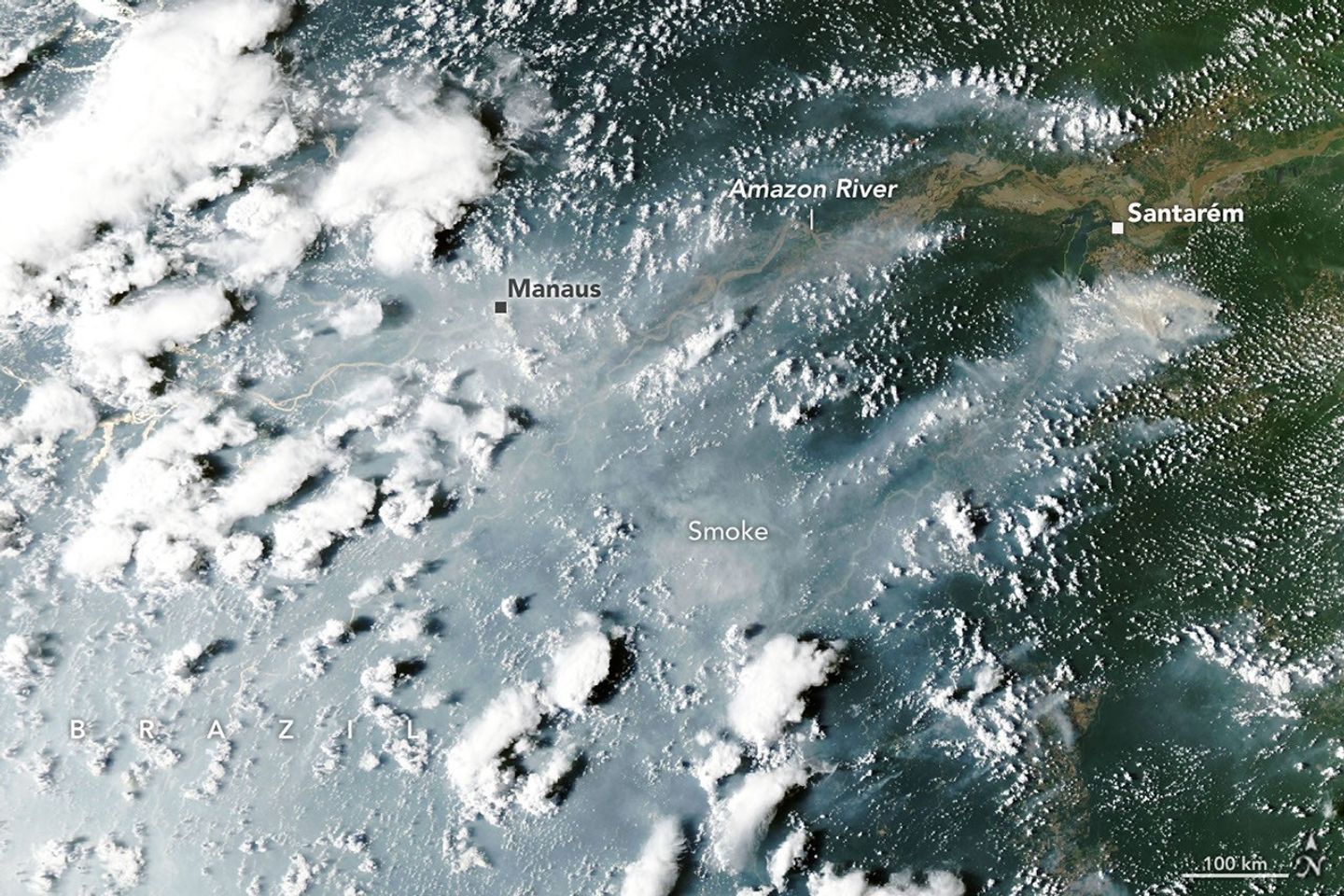
A tornado or a thunderstorm can cause damage in minutes, but El Niño works more slowly, changing weather conditions over many months. In 2026, the dry weather brought by El Niño has made the Amazon rainforest very easy to burn. Scientists believe the region is now at the start of a fire season that is likely to be long and severe. Since September, satellites have recorded a sharp rise in fires and smoke across the central and eastern Amazon. On October 12, a NASA satellite photographed smoke pouring from fires on both sides of the Amazon River. That day, the Brazilian city of Manaus, home to more than 2 million people, was covered in thick smoke. City officials said the air quality was extremely poor and warned that the air was dangerous. Schools closed, and sports games for children and other events across the city were cancelled.
According to Douglas Morton, a scientist at NASA, these fires are part of a "cascade" of tropical burning that follows the changes in rainfall caused by El Niño. In this chain of events, drought and fires first strike Indonesia, near the equator, and then move to this part of the Amazon. Morton and other researchers described this pattern in a 2017 study, and the same pattern appeared again in 2023. So far, the fires of 2026 have followed it closely. Since August, drought and smoke have affected parts of Indonesia, and in October hundreds of homes were destroyed there. Morton compared the rise in fires now happening in the Amazon to the second domino falling in a line. He and his colleagues predict that the next wave of fire will reach areas farther north in November and December. They expect the danger from drought and fire to be highest in the southern Amazon around August and September 2027.
The Brazilian Amazon is normally so wet that lightning starts fewer than 1 percent of fires, so nearly all of the current fires were set by people. Many of them began as fires used to clear plants from farmland, but they have spread out of control into the dry rainforest. This year, the drought is especially severe, and rainfall in Manaus was 95 percent below normal in August. Morton said it is both remarkable and frustrating that many forests that burned in 2015 and 2023 are on fire again. Fires do serious harm to these rainforests because most of the plants and animals living there have not adapted to fire. Some fires are also likely to burn more strongly this time, because earlier fires weakened the trees and made them easier to burn. Because this El Niño is so strong, Morton said that people should avoid using fire at all this year.
Satellites are an important tool for tracking these fires, but they do not see everything. Shane Coffield, a scientist who works at NASA, is searching satellite data for weaker fires that do not appear in official fire counts. Around Santarém alone, his team has found about 40 percent more fires than the official numbers show. Thick smoke, clouds, and the tops of the trees can block satellite sensors, especially when small fires are moving slowly along the forest floor. On the smokiest days, satellites record very few fires, even though researchers know this does not show what is really happening. Coffield plans to share the locations of these possible fires with MapBiomas, a network that tracks fires and land changes in the Amazon.
The article says that nearly all of the fires in the Brazilian Amazon were started by people, so what do you think could help reduce these fires during a strong El Niño year?
Adapted from NASA Earth Observatory.
Select Vocabulary or Quiz to practice.
Vocabulary
12 key words — tap a word for its meaning and an example
Quiz
7 questions