
One article a day, three levels your way.
Free graded English reading: every article comes in Easy, Medium and Hard, with listen-along audio. Vocabulary and quizzes are free with an account. Sign up free →
Longer sentences, more descriptive words (about B1)
Scientists Find a “Silver Lining” to Adult House Flies’ Filthy Behavior
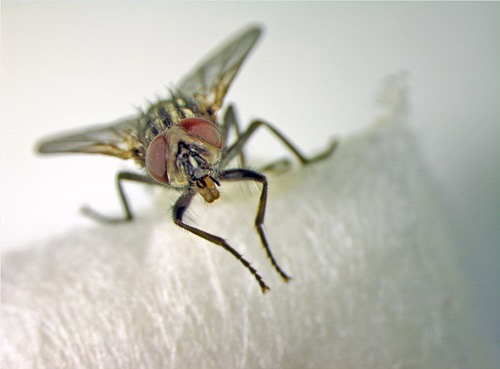
Scientists at the USDA's Agricultural Research Service (ARS) are studying the microbes that house flies carry. Microbes are very small living things, such as bacteria and viruses. The scientists want to improve disease monitoring and reduce the spread of fly-borne pathogens among livestock. This could help protect both the food supply and public health.
House flies can move harmful microbes between cattle. They may also carry these pathogens from one farm to nearby livestock operations and to residential areas. Adult flies often have free access to farm waste, cattle manure, and animal excretions. After they pick up microbes from these materials, they can pass them on. This may harm the health, welfare, and productivity of livestock, and it can cause large economic losses. One earlier study estimated that U.S. producers spend more than $1 billion each year on fly control programs alone. Good fly management can limit the spread of disease-causing microbes, which helps animal health and may also lower risks to people.
ARS researchers, university partners, and cattle producers are now working together on this problem. They want to find out which microbes adult house flies carry and how many. They also want to understand how much flies spread bacteria and viruses inside dairy farms and, possibly, to nearby farms.
In one study with Kansas State University, the team used genomic DNA, which is an organism's full set of genetic material. They took DNA from pooled samples of adult female house flies collected at one location. Analyzing this DNA gave a broad picture of the microbes in the local environment. Flies collect microbes from many sources, such as sick animals and their waste, so they work like natural "flying swabs." This method may become a new way to study environmental microbes, because scientists could analyze them efficiently and safely in the field.
Dana Nayduch, a research leader and entomologist at the Arthropod-Borne Animal Diseases Research Unit in Manhattan, Kansas, explained why this is useful. She said that conditions at dairy farms change from month to month. These include the number and health of the animals and the amount and makeup of the manure. Such changes affect which microbes are present and available to flies. Flies pick up microbes all day, every day, so testing what they carry over time shows what is happening on the farm. Nayduch added that a fly is drawn to a sick animal and may find it even among thousands of others.
Information from these continuing studies could give farm managers early warning that harmful bacteria or viruses are present. This would let them act sooner to protect cattle from serious illness or outbreaks.
Why might house flies be useful for monitoring disease on a farm, even though they can also spread microbes?
Adapted from USDA ARS Research News.
Select Vocabulary or Quiz to practice.
Vocabulary
12 key words — tap a word for its meaning and an example
Quiz
7 questions