
One article a day, three levels your way.
Free graded English reading: every article comes in Easy, Medium and Hard, with listen-along audio. Vocabulary and quizzes are free with an account. Sign up free →
Longer sentences, more descriptive words (about B1)
The Carbon Cycle: How Carbon Moves Around Our Planet
Carbon is the basic building block of all living things. It gives structure to important molecules such as DNA and proteins. Carbon is also found in the air as carbon dioxide, where it helps control global temperatures. In addition, it is a main energy source for the world economy.
Earth is a closed system, so the total amount of carbon stays the same. Carbon does not disappear. Instead, its atoms move between the atmosphere and the Earth in a process called the carbon cycle. Most carbon is locked inside rocks and sediments, and the rest is shared among the air, living things, and the ocean. The ocean is a huge storage area, or "sink." It exchanges carbon with the air at its surface and buries carbon in deeper water for a very long time.
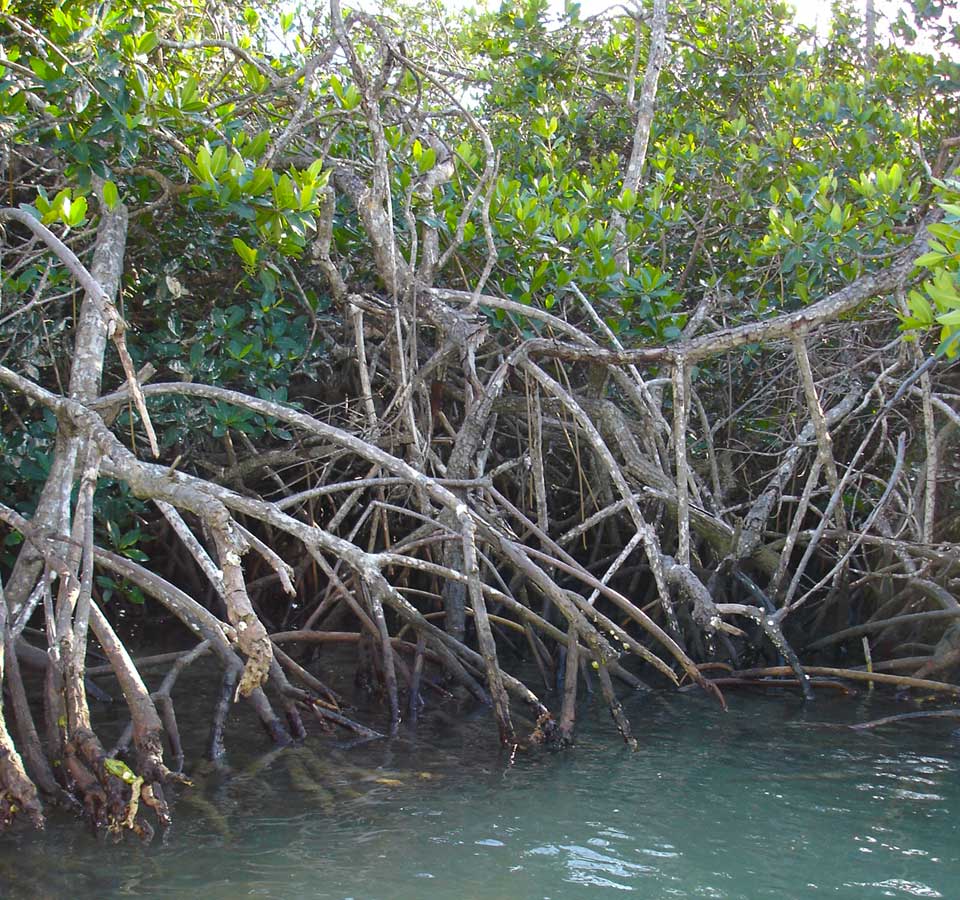
Coastal habitats such as seagrasses, salt marshes, and mangroves are especially good at storing carbon, which scientists call "blue carbon." These places take in carbon dioxide much faster than forests on land do. They can also keep it underground for thousands or even millions of years. Carbon returns to the air through natural events such as wildfires, volcanic eruptions, and the decay of dead plants and animals. Over millions of years, decaying matter can also turn into fossil fuels.
Today, human activity is changing this cycle in a big way. Building on land, making concrete, and burning fossil fuels all release large amounts of stored carbon. When people damage coastal ecosystems, the blue carbon they held for so long also escapes into the air. Because of these changes, carbon dioxide in the atmosphere is rising quickly and has reached levels not seen in the past 3.6 million years. This extra carbon dioxide changes the climate, raises global temperatures, makes the ocean more acidic, and harms living things around the world.
Why is it a problem when people damage coastal habitats such as mangroves and salt marshes?
Adapted from NOAA Ocean Facts.
Select Vocabulary or Quiz to practice.
Vocabulary
11 key words — tap a word for its meaning and an example
Quiz
7 questions