
One article a day, three levels your way.
Free graded English reading: every article comes in Easy, Medium and Hard, with listen-along audio. Vocabulary and quizzes are free with an account. Sign up free →
Longer sentences, more descriptive words (about B1)
City Lights and Airglow: A View from Space
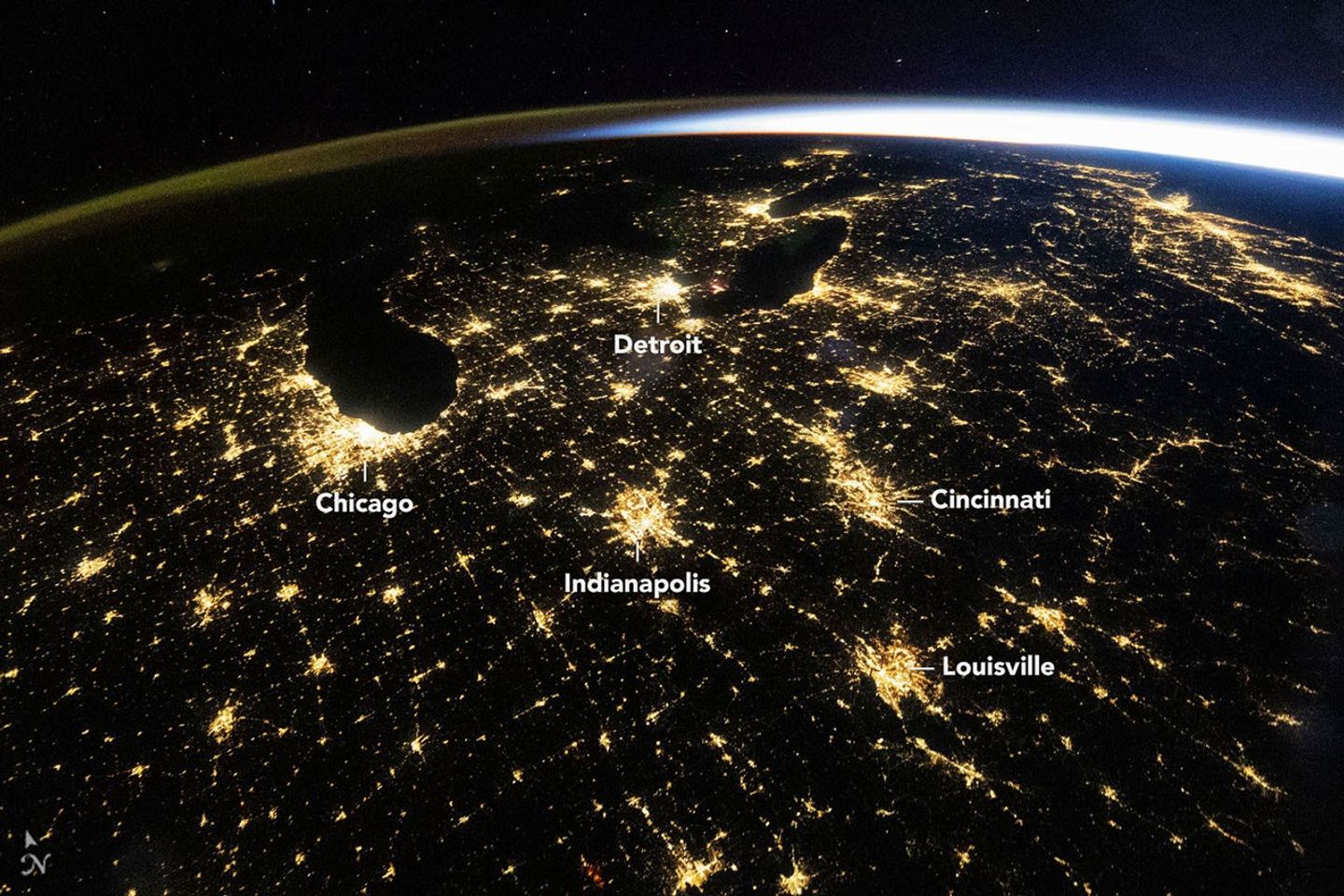
On October 18, 2026, the sky was clear over much of the eastern United States before sunrise. An astronaut on the International Space Station used the good conditions to take a wide photograph. The picture shows cities of many sizes glowing against the dark ground.
Large cities in the U.S. Midwest, such as Chicago and Detroit, are among the brightest sights in the photo. Smaller cities like Indianapolis, Cincinnati, and Louisville also glow strongly. The highways that connect these cities can be seen as well.
High above the city lights, a faint green and orange layer stretches along the horizon on the left. This is airglow, which happens when sunlight hits atoms and molecules high in the atmosphere and makes them release light. On the right side, sunlight curves along the edge of Earth. When the photo was taken, sunrise was about an hour away on the East Coast and about two hours away in Chicago.
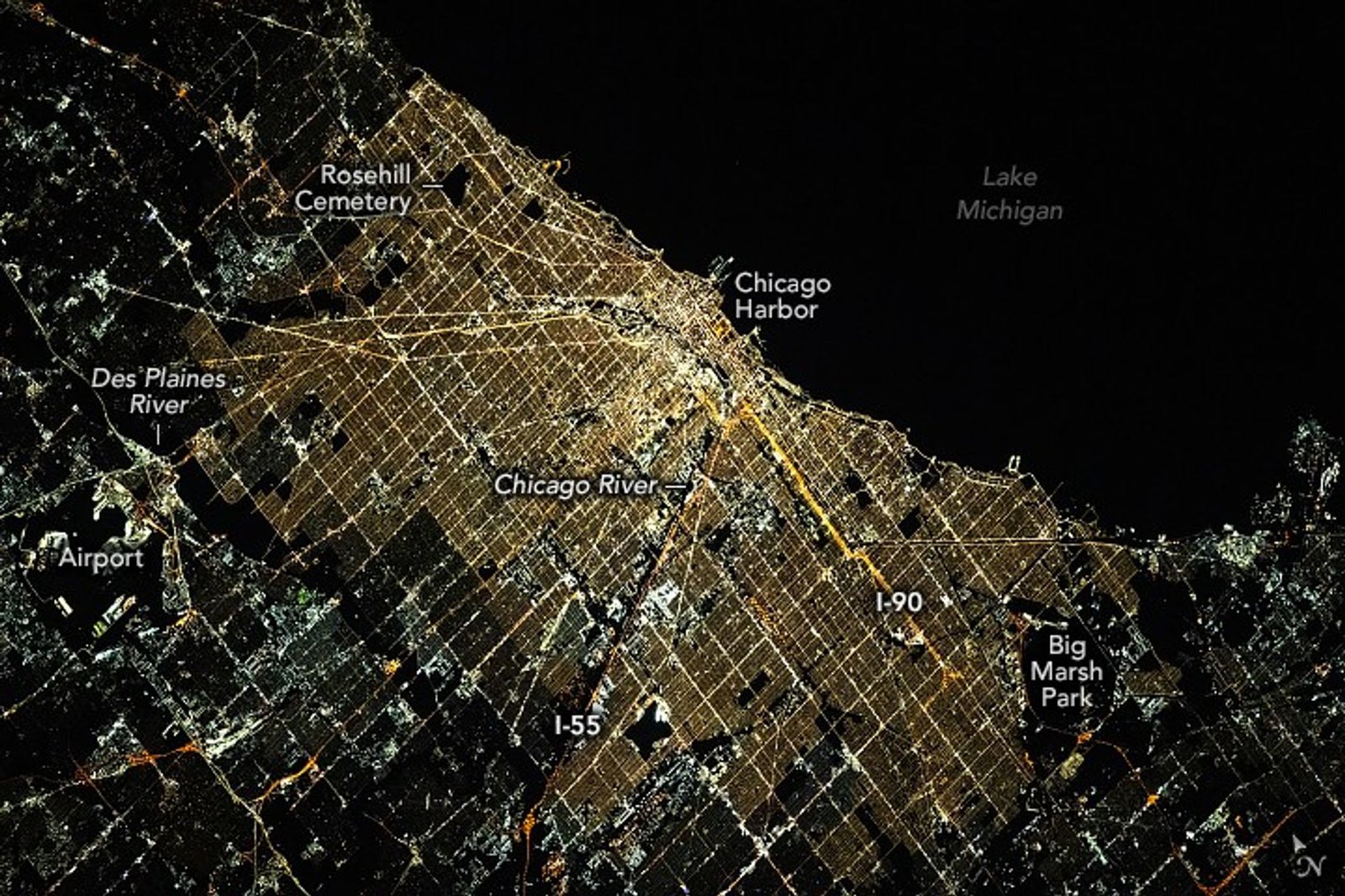
Photos from astronauts and other kinds of remote observation help scientists follow changes in cities. From far away, Chicago's lights look pale yellow, but close-up photos show many different colors that come from different kinds of lighting. Using NASA's large archive of astronaut photos, researchers have found a way to tell lighting types apart in night images. By measuring the brightness, color, and spread of city lights in a consistent way, scientists can learn more about how cities grow and change.
Satellites also track changes in lighting. NASA's Black Marble product suite turns satellite data into reliable records of nighttime lights around the world, on daily, monthly, and yearly scales. Scientists in the eastern U.S. have used these records to follow power outages after major storms, new infrastructure, and the shift from older lights to LEDs.
How can photos and satellite records of nighttime lights help scientists understand changes in cities?
Adapted from NASA Earth Observatory.
Select Vocabulary or Quiz to practice.
Vocabulary
12 key words — tap a word for its meaning and an example
Quiz
7 questions