
One article a day, three levels your way.
Free graded English reading: every article comes in Easy, Medium and Hard, with listen-along audio. Vocabulary and quizzes are free with an account. Sign up free →
Longer sentences, more descriptive words (about B1)
What Is a Tide Pool?
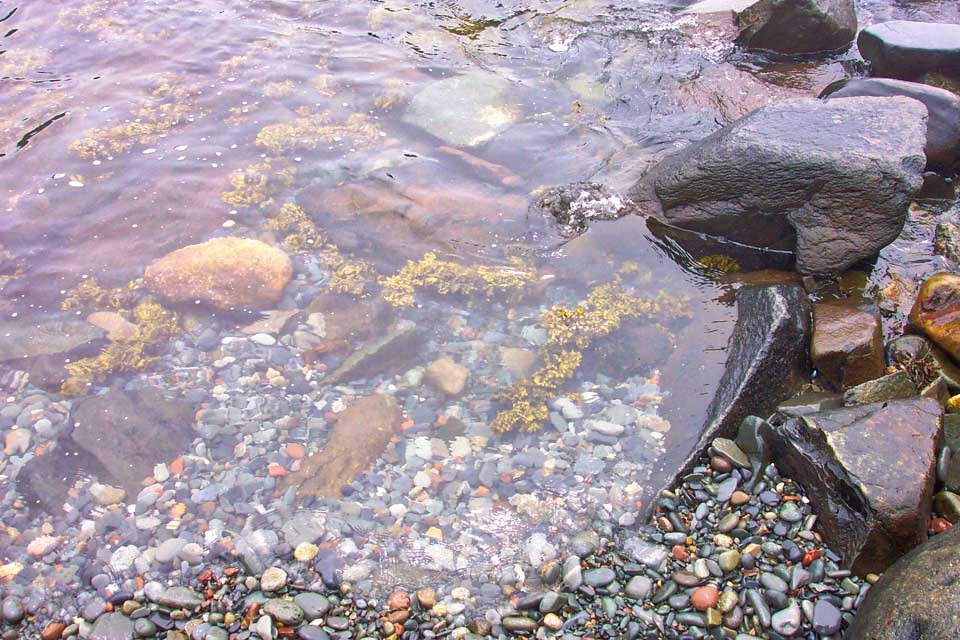
Tide pools are small pools of seawater along rocky shores. They form when the tide goes out and leaves some water behind. Most tide pools are a few inches to several feet deep and a few feet wide. Even so, they support many tough living things, including snails, barnacles, mussels, sea stars, seaweed, and small fish.
Life in a tide pool is hard. At low tide, the sea pulls back, and the animals and plants face several hours of strong sun, low oxygen, and rising water temperature. Wading birds that feed in shallow pools also hunt them. When the tide returns, fresh seawater fills the pool again. However, the residents must then survive powerful crashing waves, as well as fish that can reach the shore for a short time to look for food.
To cope with these harsh conditions, many tide pool animals hold on tightly to the rocks around them. Barnacles, for example, make a cement that hardens quickly and keeps them in place. This substance is one of the strongest natural adhesives known. Researchers are now investigating whether it could be collected or copied for commercial use.
Space in a tide pool is limited, but food is plentiful. With each wave at high tide, new nutrients and tiny living things called plankton arrive in the pool. These help to replenish the pool's complex food chain. The tiny organisms feed the smallest animals, and those animals in turn feed larger ones.
Which of the dangers that tide pool animals face do you think is the hardest to survive, and why?
Adapted from NOAA Ocean Facts.
Select Vocabulary or Quiz to practice.
Vocabulary
12 key words — tap a word for its meaning and an example
Quiz
8 questions