
One article a day, three levels your way.
Free graded English reading: every article comes in Easy, Medium and Hard, with listen-along audio. Vocabulary and quizzes are free with an account. Sign up free →
Longer sentences, more descriptive words (about B1)
Fires Char New Guinea
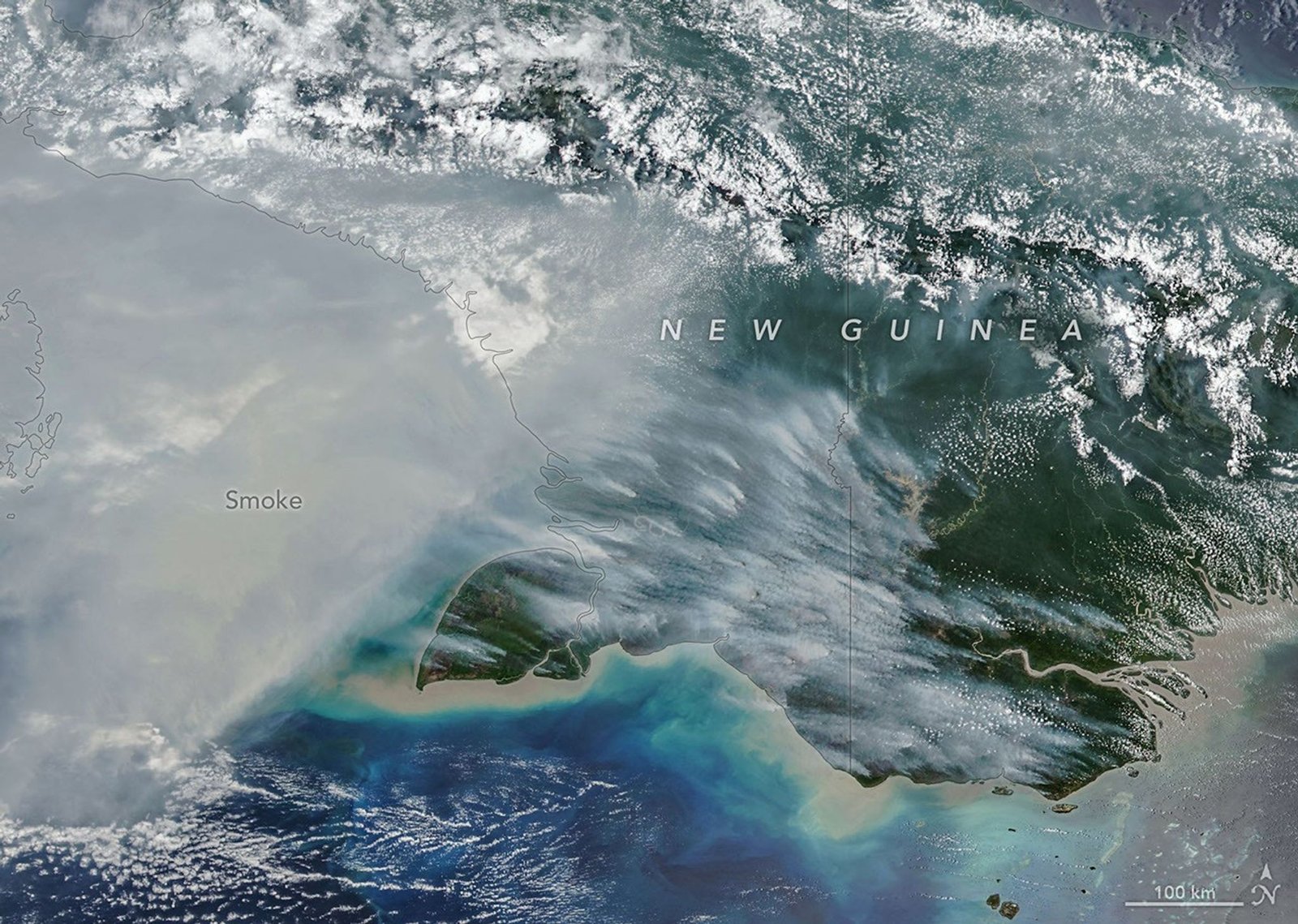
New Guinea is the second-largest island in the world, and it has many kinds of plant life. In September and October 2026, however, a strong El Niño brought drought to the island. Fires spread across it, and thick smoke covered large areas for several weeks. The smoke caused serious air pollution, which delayed and cancelled flights and closed schools. In some areas, officials told children and older people to wear masks. Robert Field, a NASA scientist, explained that some smoke is carried high into the air by storms. However, much of it stays near the ground and harms air quality.
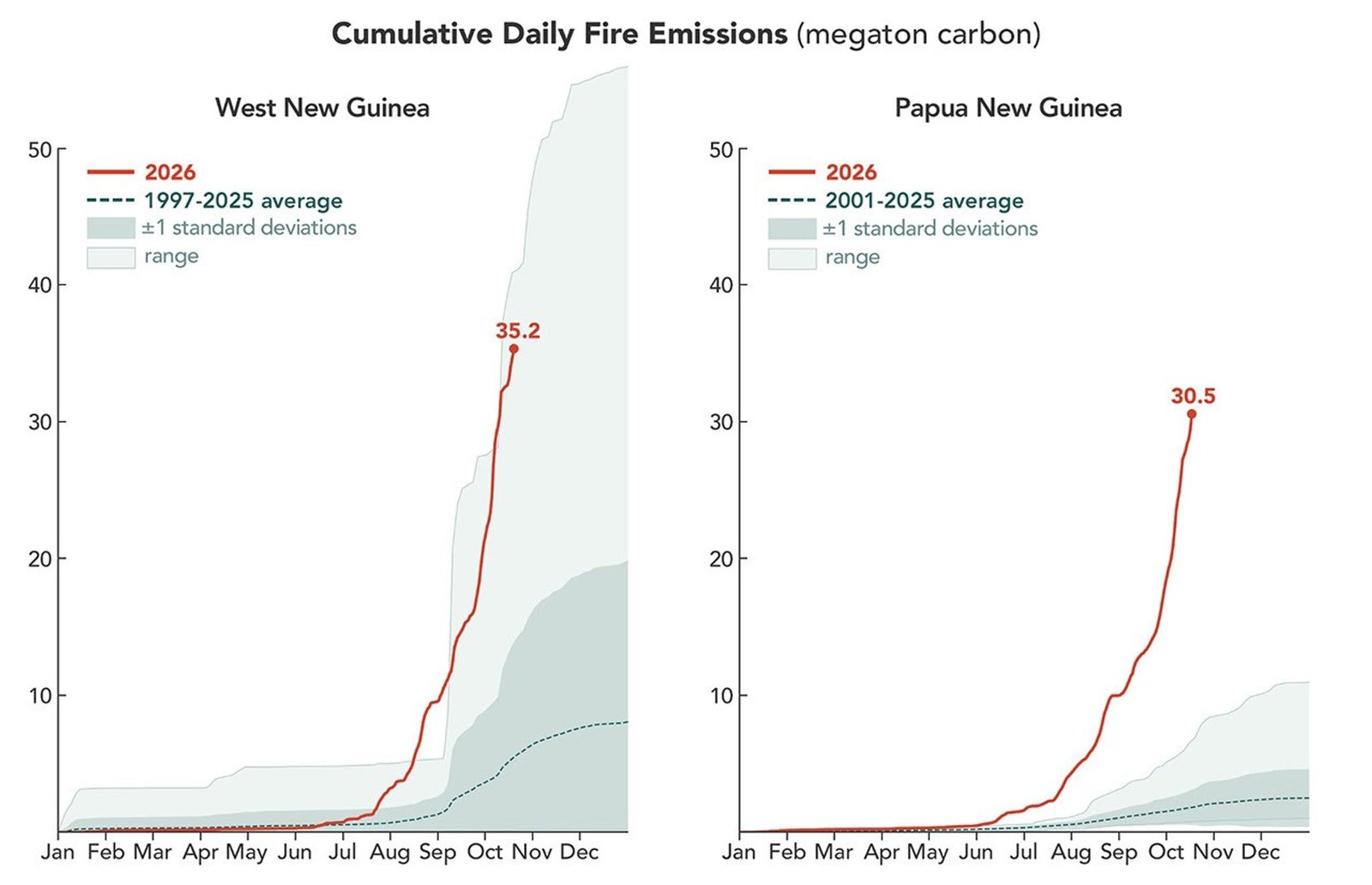
The Global Fire Emissions Database (GFED) uses satellite data to estimate how much carbon fires release. By October 17, fires in Papua New Guinea, on the eastern half of the island, had released close to 32 megatons of carbon. No other year on record had reached this level by that point in the year. Guido van der Werf, a fire scientist, said that 2026 will very likely become the worst year on record for the country. On the Indonesian side of the island, fires released more than 35 megatons of carbon. This is the third-highest total after 2015 and 1997, which were also El Niño years with severe fires.
El Niño changed rainfall patterns and made the weather unusually dry. In the far south of Papua New Guinea, the weather service recorded more than 90 days in a row without rain. Since August, parts of this region have received only about 5 to 10 percent of their normal rain. Local news reports say the drought has also damaged crops and caused water shortages. In this normally wet region, researchers say that people start almost all fires. They burn land to grow crops, care for pasture, clear forest, or hunt. When the land is dry, these fires can spread and become wildfires that nobody can control.
Researchers also point to deforestation in Indonesian Papua. Over the past twenty years, land there has been cleared for oil palm and pulpwood plantations, mining, and growing cities. In 2025, the region lost 27,000 hectares of primary forest, almost twice as much as in 2024. In contrast, fires on the Indonesian island of Sumatra are lower than in other drought years. One reason is that much of the land there is already developed, and large plantations often have their own fire brigades. Most fires now happen in unmanaged areas and along the edges of primary forest. The fires are expected to continue until the heavy rains of the wet season arrive in early November.
How do both the weather and human activity help explain why the fires in New Guinea became so serious this year?
Adapted from NASA Earth.
Select Vocabulary or Quiz to practice.
Vocabulary
11 key words — tap a word for its meaning and an example
Quiz
7 questions