
One article a day, three levels your way.
Free graded English reading: every article comes in Easy, Medium and Hard, with listen-along audio. Vocabulary and quizzes are free with an account. Sign up free →
Longer sentences, more descriptive words (about B1)
Protecting Earth From Asteroid 2024 YR4
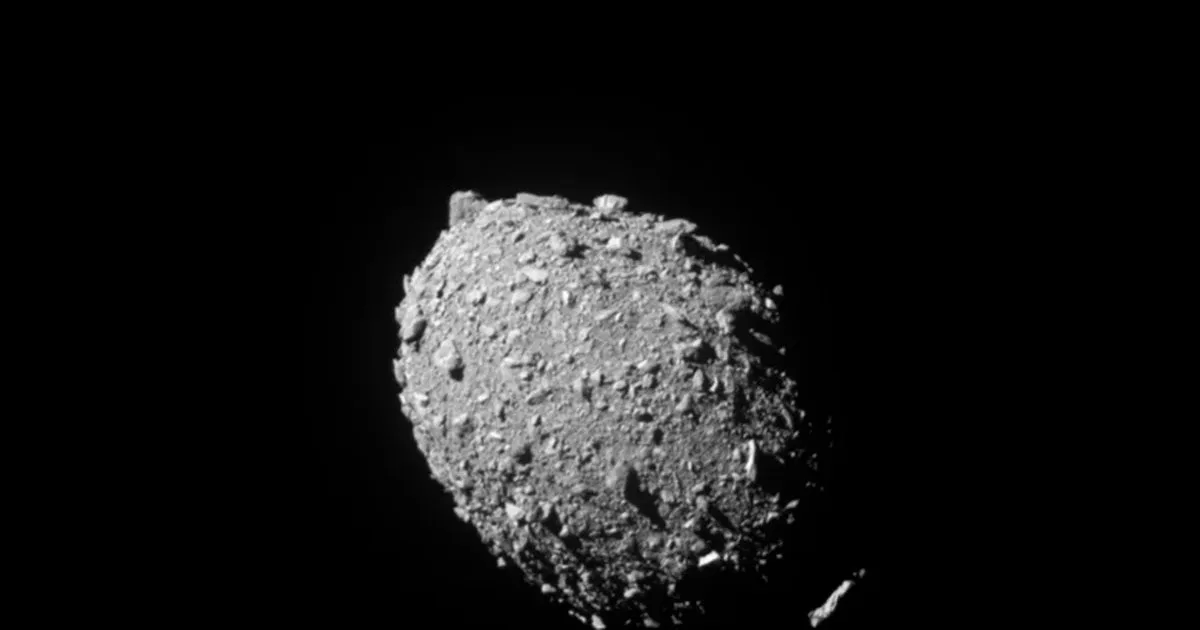
Scientists who watch objects in space say there is only a very small chance that a large rock will hit Earth in 2032. NASA recently estimated a 3.1 percent chance that asteroid 2024 YR4 will strike Earth on December 22, 2032. That is the highest chance given in modern times to a large space rock of this kind. A rock this size could destroy an entire city. Officials at space agencies say the world is now far better prepared to protect itself. Richard Moissl leads the European Space Agency team that works to protect Earth from dangerous space rocks. He said the danger is possible, but people should not worry about these reports. Researchers have found that the estimated chance of a direct hit often rises for a time as they collect more measurements. After that point, scientists say the chance will likely fall to zero. Even in the unlikely case that this chance reached 100 percent, Earth would still have ways to respond.
Several defense methods are now under study. The only method already tested on an asteroid is hitting it with a spacecraft. In 2022, NASA sent a spacecraft into Dimorphos, a rock 160 meters wide. The mission succeeded in changing the smaller asteroid's path around a larger nearby rock. Asteroid 2024 YR4 is thought to measure 40 to 90 meters across, about half as wide as Dimorphos. Agencies could send several spacecraft against it and watch how each crash changes its course. Too much force must be avoided, because pieces could still head toward Earth if the asteroid only partly breaks apart.
Other ideas avoid touching the asteroid at all. One plan would fly a large spacecraft beside the rock so the spacecraft's gravity slowly pulled it off course. Another would release a steady stream of atoms from a nearby spacecraft to push the asteroid aside. Researchers have also considered painting one face of the rock white. More light from the sun might then slowly change its path. Laboratory tests have shown that a nuclear device can move a rock. That idea is mainly for asteroids several kilometers wide. It also risks sending extra pieces toward Earth. A less dangerous idea would fire laser light from a spacecraft to remove material from one side and push the rock away.
If none of those measures worked, scientists would at least know the place where the rock would hit. Most asteroids of this size would threaten at most one city, so people could leave the area in time. Moissl said seven and a half years would allow plenty of time to prepare. Even with the recent rise in estimated risk, the chance that 2024 YR4 misses Earth remains about 97 percent.
Which method for moving an asteroid do you think is the safest, and why?
Adapted from VOA Learning English.
Select Vocabulary or Quiz to practice.
Vocabulary
12 key words — tap a word for its meaning and an example
Quiz
10 questions