
One article a day, three levels your way.
Free graded English reading: every article comes in Easy, Medium and Hard, with listen-along audio. Vocabulary and quizzes are free with an account. Sign up free →
Longer sentences, more descriptive words (about B1)
Supply and Demand: Why Do Prices Go Up and Down?
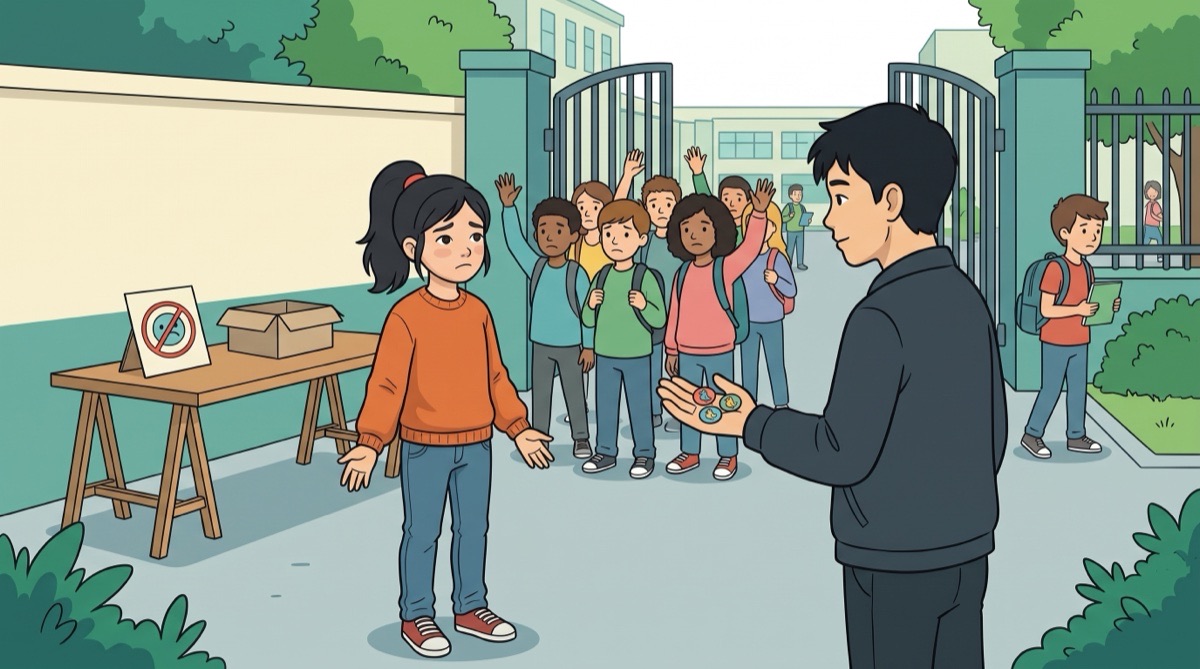
Lucy is twelve years old. She lives in Riverton with her parents and her brothers, Jack and Max. Her school has a tradition: every spring, the student council sells special pins with the school mascot. This year, the council makes a limited run of 50 pins and sells each one for $2.
The sale starts on Monday morning, and by lunchtime, all 50 pins are gone. Lucy was late, and she has no pin. She wanted one badly, because her best friend wears one on her backpack, and at lunch everyone is talking about the pins. On Tuesday, she sees an older student at the gate with a handful of pins.
Lucy says, "How much for a pin?"
The older student says, "Six dollars."
Lucy stares at him. She says, "Six dollars? They cost $2 yesterday!"
She goes home and tells Dad what happened. Dad says, "Let's check the numbers."
Supply, Demand and a Shortage
The number of pins that were made is the supply. In this case, the supply is limited, because the council made only 50 pins. The number of students who want pins and can pay for them is the demand. Many more than 50 students wanted one.
When demand is higher than supply, there is a shortage. Some buyers cannot get what they want at the price on the tag. The students who still want a pin are willing to pay more, and some sellers see a chance to resell pins at a higher price. Because buyers compete, the price goes up.
| Situation | Supply | Demand | What happens to the price |
|---|---|---|---|
| Council sells 50 pins at $2 | 50 pins | Over 200 students | Sell out; resale rises to $6 |
| Council makes 150 more pins | 200 pins | Over 200 students | Resale price falls toward $2 |
| Nobody wants pins any more | 200 pins | Few students | Price falls below $2 |
Prices go up when many buyers want few goods. They go down when many sellers have many goods and few buyers want them.
Back to the School Gate
The next week, the student council sees the problem. They order 150 more pins and sell them for $2 each. The older student at the gate still has his pins, but now nobody wants to pay $6. Within two days, he sells them for $3 each, and then for $2.
Lucy buys her pin at the school office for $2. She says to Dad, "It's strange. The pin is the same pin, but the price changed, because the supply changed."
Dad smiles. He says, "That is the idea behind every market."
Original ReadLevels article.
Select Vocabulary or Quiz to practice.
Vocabulary
6 key words — tap a word for its meaning and an example
Quiz
6 questions