
One article a day, three levels your way.
Free graded English reading: every article comes in Easy, Medium and Hard, with listen-along audio. Vocabulary and quizzes are free with an account. Sign up free →
Longer sentences, more descriptive words (about B1)
Jobs and Wages: Why Does One Hour Pay Differently?
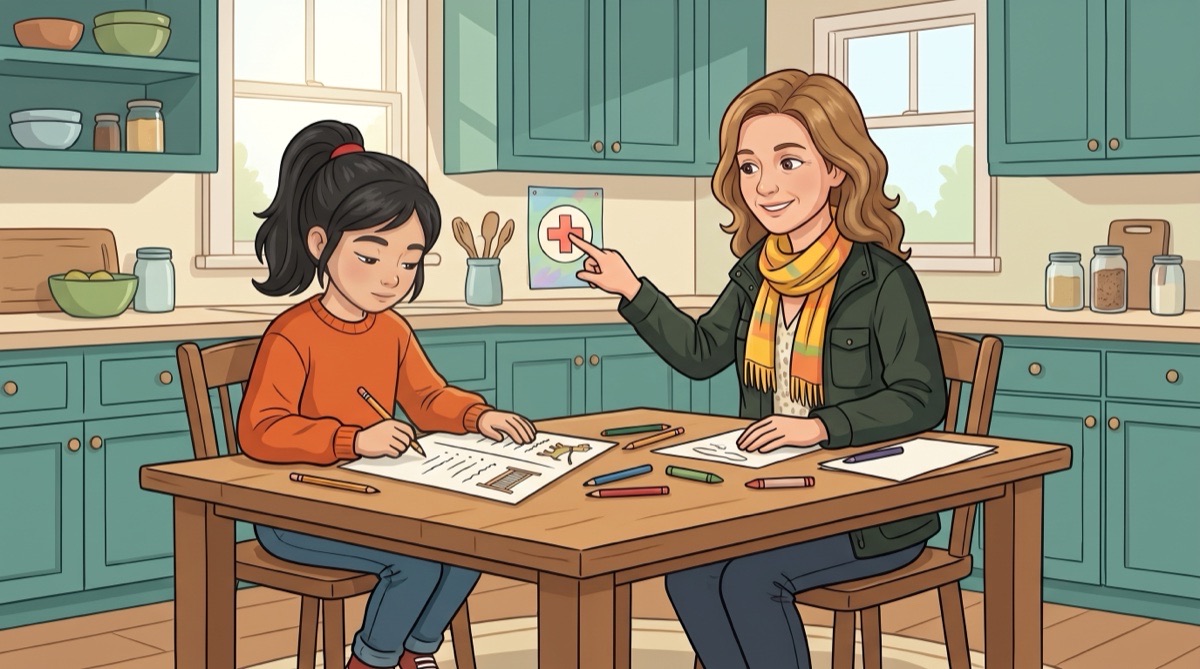
Lucy is twelve years old. She lives in Riverton with her parents and her brothers, Jack and Max. This summer, she wants to earn her own money, and she has two ideas: babysitting for neighbors and walking dogs. Both jobs are available on her street.
At the kitchen table, Lucy writes a list with Mom. Mom says, "Plan first, then spend. And plan first, then work. What will each job pay?"
Lucy asks around the neighborhood. Mr. Evans next door needs someone to walk his dog for an hour every morning, and he offers $6 an hour. The Parks family needs a sitter for their two small children on Friday nights, and they offer $8 an hour.
Lucy asks, "Why does babysitting pay more? I like dogs more."
She imagines both jobs. The dog next door is soft and funny. But she also likes children, and she is good at telling stories.
Mom says, "Think about what each job asks of you."
| Job | Wage per hour | What the job needs |
|---|---|---|
| Dog walking | $6 | Leash, energy, care for one dog |
| Babysitting | $8 | Patience and care for two children |
Skills and Wages
A wage is the price of an hour of work. Employers pay more for jobs that are harder to do, that carry more responsibility or that need more training. A person with more experience or special skills can ask for a higher wage, because fewer people can do the job well.
Mom tells Lucy that the Red Cross in Riverton offers a first-aid course for teenagers. It costs $30 and takes one Saturday morning. A sitter with a first-aid certificate can ask for $10 an hour, because parents feel safer.
Lucy does the math. If she works 15 hours as a sitter, she earns $30 more with the higher rate: two extra dollars for each of the 15 hours. That is equal to the cost of the course. After that, the extra wage is all hers.
Back to the Kitchen Table
Lucy takes the first-aid course on Saturday. A teacher shows her how to help a child who is choking and how to clean a cut. The next week, she tells the Parks family about her certificate, and they agree to pay her $10 an hour.
Lucy says, "I thought I was choosing between two jobs. But I could also make one job worth more."
Mom smiles. She says, "That is called investing in yourself."
Original ReadLevels article.
Select Vocabulary or Quiz to practice.
Vocabulary
6 key words — tap a word for its meaning and an example
Quiz
6 questions